Episode 10: "Whose Solutions?" Podcast por el Clima at COP25 with Sumugan Sivanesan

The Decolonization in Action Podcast presents a chronological sweep of field recordings and interviews taken in Madrid during COP25, December 2019, by our guest host Dr. Sumugan Sivanesan.

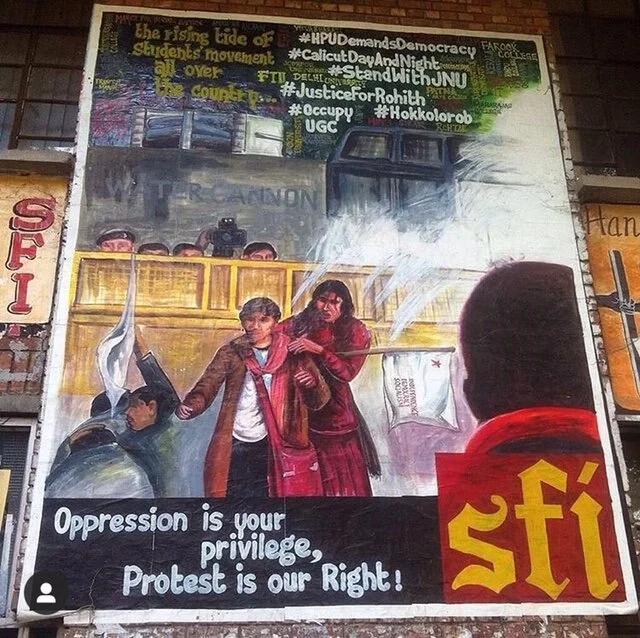
It begins with the December 6 Manifestacíon in which around 500,000 people marched in the streets of Madrid, before tracing discussions at the Social Summit for the Climate (Cumbre Social por el Clima) at Complutense University and at other actions around the city. In front of the US embassy, this episode focuses on a demonstration led by Indigenous women who sang the Women’s Warrior Song, a song written by Martina Pierre from the Lil’wat First Nation that honors missing and murdered Indigenous women and girls. Indigenous women face the highest rates of murder and sexual assault in North America, and in Madrid the song connected these crimes to extractivist fossil fuel industries operating on unceded Indigenous lands. The montage culminates five days later with a casserolado noise demonstration outside the COP, in support of Indigenous delegates, Fridays For Future, and other civil society groups staging a demonstration inside the COP against the removal of references to Human Rights in the negotiations and widespread reports of bullying and inaction.

cumbresocial.png

This episode includes interviews and speeches by:
ASAD REHMAN, Executive Director of War on Want
VANESSA NAKATE, Founder of the Rise Up Movement
NICOLE FIGUEIREDO DE OLIVEIRA, Director of 350.org in Brazil and Latin America
MARTA BORDONS MARTÍNEZ, Climate activist, Fridays for Future Sevilla
MOÑEKA DE ORO, member of the Micronesia Climate Alliance
NIGEL HENRI ROBINSON, Denesuline organizer, radio host, and humorist from Cold Lake First Nations, Indigenous Climate Action
CHIEF DANA TIZYA-TRAMMVuntut Gwitchen First Nation

Muchas gracias to Grey Filastine and all who participated in Sound Swarm #5; Amalen, Danny, Delia, and Kevin from the Artivist Network; Fiona Carpe Deville and Stijn Verhoeff.

And a special thanks to Ruth Miller from Native Movement, who shared the history and meaning behind the Women’s Warrior Song.

Beyond Survival: Find Solace in Comedy

In this episode of Decolonization in Action, I spoke with Berlin-based comedian, Kate Cheka about the Enlightenment, (post)coloniality, and the power of protest. In addition to talking about her work in comedy and the radical potential of joy and community building comedy can create, Kate also shares her scholarly research from her master’s thesis which centered around decolonial critiques of the Enlightenment. After studying in New Delhi and Buenos Aires, Kate also talks about how traveling to formerly colonized cities gave her an expanded understanding of ongoing forms of coloniality as well as the ways in which the classroom continues to be a colonial space.

Image taken by Kate Cheka.

Image taken by Kate Cheka.

Kate Cheka is a Berlin-based recent graduate in MA Global Studies at the Humboldt University. Her thesis entitled The Threat of European, Enlightenment Thinking in (Post)colonial Spaces was inspired by her time at Jawaharlal Nehru University in New Delhi. It is about the exportation of the hyper-rationality of European thinking to the Global South. Presenting the voices of feminist, decolonial, and marginalized theorists it argues that the solutions to our present crises already exist but are often overlooked by Western hegemony. She is also a regular on the Berlin comedy scene and produces two shows – a femmes open mic Shows before Bros (every third Wednesday of the month) and a women of color showcase WOKE PANTIES.

Decolonization in Action Interview Episode 7: Climate Justice Matters For Black Lives Now"

Cairo 2014.jpg

During the latest episode of the Decolonization in Action Podcast, I interviewed Black and African people who dedicate their creative practices and activist work to climate justice and sustainable futures. While the UN Climate Change Conference (COP25) is taking place in Madrid, I discussed the climate crisis with Rebecca Abena Kennedy-Asante from BLACK EARTH – BIPoC Environmental & Climate Justice Kollektiv Berlin, and Antoinette Yetunde Oni, an architectural designer and artist based in Lagos, Nigeria.

The episode begins with Antoinette Yetunde Oni, a Lagos-based artist who was a 2019 fellow at ZK/U, Center for Art and Urbanistics in Berlin in cooperation with the Department for Art and Culture Berlin-Mitte, Galerie Wedding, SAVVY Contemporary Berlin, and the Arthouse Foundation Lagos. Antoinette talks about her recent exhibition, New Commons Lagos to Berlin, in Berlin at Galerie Wedding and her commitment to activating design and African sustainable practices as ways to combat the climate crisis. She also connects how extractive capitalism and colonialism are not only the underlying causes of increased flooding in Lagos but are also directly related to racism and the exclusion of BIPoC activists within climate movements in London and Berlin. To prevent the climate crisis from continuing, she discusses how people need to come before profit.


In the second part of this episode, Rebecca Abena Kennedy-Asante from BLACK EARTH – BIPoC Environmental & Climate Justice Kollektiv Berlin contextualizes the recent Fridays for Future Climate Strike in Berlin within the country the emits the most carbon pollution in Europe: Germany. In order to confront the climate crisis, she talks about the importance of understanding how this crisis itself arose, which is the story of colonialism, industrialization, and violence that has lasted over 500 years. She also links current climate justice movements with centuries of anti-colonial struggles, discussing how protecting land rights has always been about also protecting the environment, while also talking about how the BLACK EARTH collective brings Black and Indigenous as well as non-cis, trans, intra, and non-binary perspectives to the climate justice movement in Berlin.

As always you can check out the episode on iTunes, Spotify, and Soundcloud.

Here are some resources that you can consider

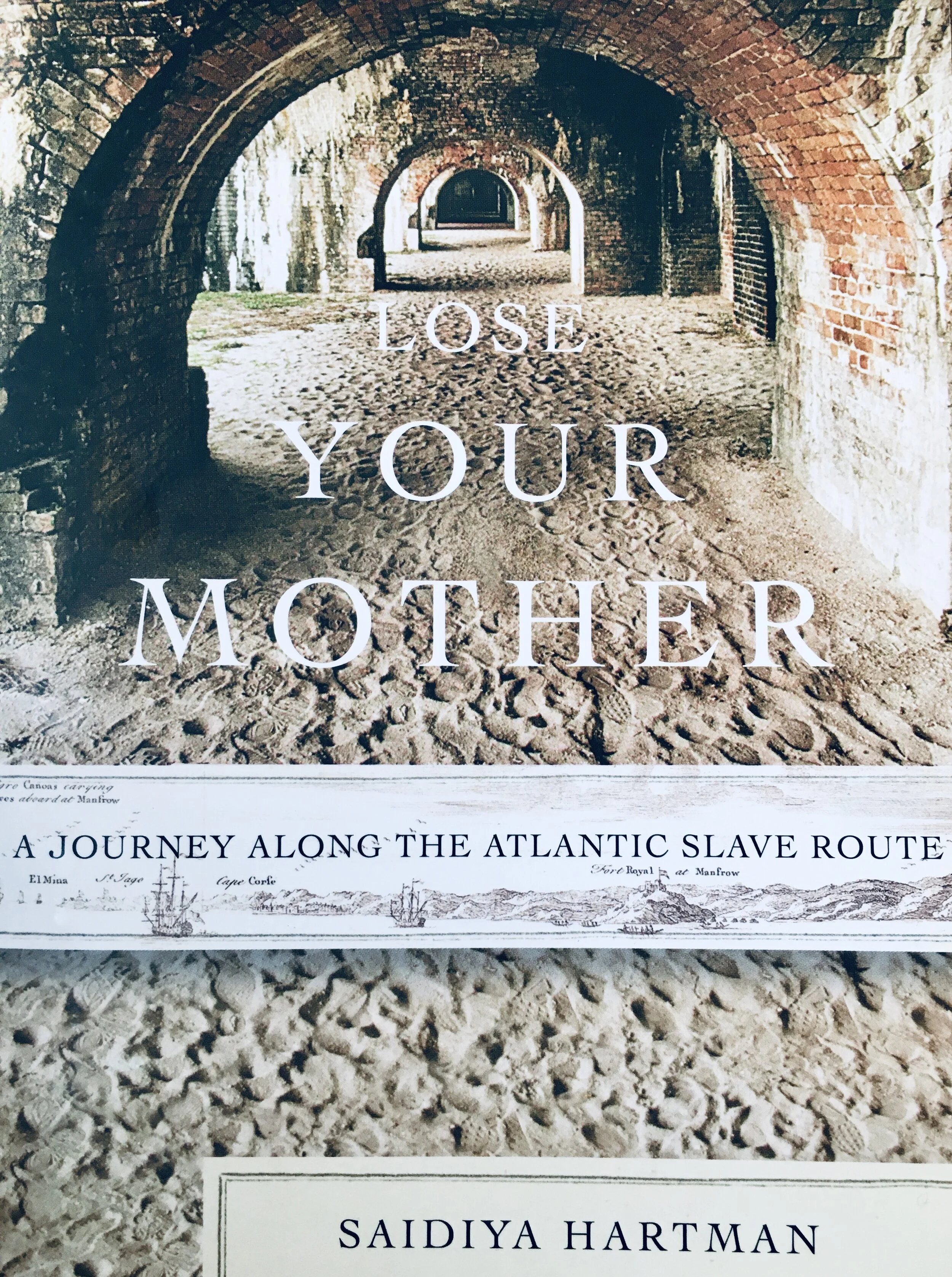
Re-connecting with "Lose Your Mother"

lose your mother.jpg

This morning I re-read Sadiya Hartman’s Lose Your Mother. In 2009, when I first discovered the text, I was living in Harlem, studying at Columbia, barely surviving, and always hustling. Hartman’s intellectual journey and fragmented familial history was her attempt to undo the erasure of her ancestors, to search for the intimate encounters of New World Blacks. As the progeny of African captives, our otherness is marked by the folks who survived the Middle Passage and enslavement, people who excite a transient dial between joy and pain, with a splash of ratchetness interwoven with prophetic dreams. Upon dismemberment in Ghana, she discovered that her skin folk saw her as a “foreigner from across the sea.” A line had been drawn. Africans who never left the continent had moved on from recognizing us as their own, or rather, the ethnic groups that Hartman encountered had a new set of problems—the postcolonial ghosts of British imperialism—the vast continent that kept on growing. Different sets of traumas attended to the cultural separation and difference that made her feel like that far removed cousin sitting awkwardly occupying a seat at a family table As I read Hartman’s prose and absorbed the pain of knowing that we Black Americans are strangers in the country of our birth and aliens on the continent that our ancestors were stolen, I wept. I lamented for the dead I will never know and the living who never see me as their own.

Tomorrow, I travel to South Africa. To the best of my knowledge, this will be the first time that someone in my family has been to sub-Saharan Africa since slavery. Re-reading Lose Your Mother demonstrated that I am not fully prepared for the emotional burden of having a lifetime of being alien, strange, and foreign. I will try to gather my ancestors and listen to the ghostly redolent strength, guiding us, inspiring us, and reminding us to continue our legacy of survival.

Unsettling the Roots of the Climate Crisis in the Middle East

Please check out my article my latest article in Stillpoint Magazine for their Fallows Issue. Contents are here:

Unsettling the Roots of the Climate Crisis in the Middle East

by Edna Bonhomme

Sci-copia by Sadie Weis

Sci-copia by Sadie Weis

On December 2011, I visited Cairo during the excitement of mass mobilization—of the disenfranchised, the young, and the poor—to topple a dictator, to imagine new possibilities, and to participate in forming a more democratic society. I visited the fortress city at the tail-end of the Arab uprisings, where vestiges of encampments could be found in Tahrir Square, popularly known as Liberation Square. Politics was a quotidian act, where people exercised their hopes doing what Asef Bayat has called “generating new spaces within which they can voice their dissent and assert their presence in pursuit of bettering their lives.” There was a palpable sense of systematic change, yet buried underneath this political metamorphosis was my own bodily alteration. I could not breathe. During my trip, I developed mild respiratory issues, my skin broke out, and my mucus was black. The most likely explanation was exposure to perennial air pollution in Cairo, a visible cloud that settles over the city, smothering the Nile Delta, and beyond. This ecological phenomenon plagues the city, darkening the sky into a foreboding smog which is gathered from desert grains and industrial pollution, carbon-based vehicles, and manufacturing plants. My bodily reactions are unsettling, and point to climate change, which impacts whether or not people can respire in the city.

The air pollution in Cairo is indicative of how climate change is rooted in extractive resources such as petrol, gas, and coal and are then envisaged in a postcolonial landscape, generating airborne and respiratory diseases on a global scale. In his monograph Breathing Space, Greg Mitman depicts “breathing spaces,” which are linked to both nature and human constructions. He writes:

[T]he places where Americans have struggled to breathe, as well as the spaces they have created to breathe more freely—lavishly landscaped estates, hay fever resorts, air-conditioned homes—have been shaped, not only by the ecology of animal, insect, plant, and man-made allergens, but also by the unequal distribution of wealth and health care in American society. 

Although the place and inequality he discusses is focused on the United States, the consequences of who is allowed to breathe extends globally. According to a 2018 report by the World Health Organization, 90% of the world’s population breathes polluted air, yet the ecological damage varies. For people in mega cities like Cairo, air pollution can persist for days or weeks at a time. Such volatile ecological phenomena sends people to the hospital with exacerbated lung infections and asthma attacks at unusually high rates, and contributes to cancer and other long-term illnesses.

In her essay “On Being Ill,” Virginia Woolf lamented over literary representations of poor health. In this piece, she argues that authors rarely write about illness in their work and suggests that accounts on malaise could enliven the reader. For Woolf, a malady offered a significant amount of inspiration and leverage for a colorful story. The body and its ailments are part of a broader struggle that exists between the soul and the corpus. For the sick, the world is turned on its head. The leaves outside may appear purple and family members might appear taller than normal. Physical pain might distract one from concentrating well. Altogether, illness changes one’s mood and perceptions. 

By this account, illness cannot be reduced to the physical. I agree with Woolf. The environment plays into bodily illness and how marginalized groups, such as the (formerly) colonized, speak about and embody illness. These personal and literary formulations can go a step further—they can point us to why people get sick in the first place and how illness is rooted in the social and economic processes that initiate ill health. Disease is not an abstract phenomenon that exists internal to the body, rather, it is co-produced by the environment we move through, the air we breath, and the toxicities we ingest. Climate change is part of our medical narrative.

My encounter with the air pollution in Cairo is one of many examples of how a moment and a new environment is linked to the global gravity of climate change. Climate change gestures to the transformation of bodies and the creation of new illnesses. The sensation of breathing toxic air and the permutations in the particles one inhales is one of the many examples of how toxicities are made omnipresent. Our bodies operate as vestibules subjected to the new social geography that global capitalism is reifying, generating hierarchies of life and death. Since the beginning of the nineteenth century, modernization projects in Cairo, as documented by Khaled Fahmy in All the Pasha’s Men, produced massive state projects including expanding irrigation systems, reforming educational institutions, and expanding agricultural production. While Egyptian nationalist efforts played a role in changing the built environment, British imperial interventions, especially alongside development along the Nile River, as Jennifer Derr writes, also generated new diseases. Even further, Red Sea, Mediterranean Sea, and Suez Canal transportation is another mode of how development projects in Egypt have increased its carbon footprint. Climate catastrophes are not independent phenomena that exist in local settings, rather they are part of five hundred years of colonialism as Imeh Ituen and Rebecca Abena Kennedy-Asante have remarked.

The history of environmental and climate change in Cairo and the Middle East is a key example of increased temperature, increased desertification, and increased air pollution. In their 2018 article on climate change in the Middle East and North Africa, Edoardo Bucchignani and his colleagues projected temperature increases of 0.44 and 0.22 degrees and a reduction of precipitation. The data is not accidental, rather it is a growing environmental crisis that has been deployed for centuries. In Something New Under the Sun, J.R. McNeill indicated that “the world in the 20th century used 10 times as much energy as in the thousand years before.” What he is gesturing towards is the nearly sixteenfold energy use and increases in industrial output. A profound shift has happened between humans and nature, and humans have been part of that climatic shift. The Anthropocene, as popularized by Nobel Prize winner Paul Crutzen, has circulated as one of the many ways that people mark, classify, and interpret how climate change occurs today.

The notion of the Anthropocene can be a useful tool, and more recently, the notions of the plantationocene and the capitalocene, offer insight about the legacies of capitalism on the earth. Researchers identify the plantationocene with former and present plantations that organize agricultural, human, and financial relations. As an environmental humanities practice, researchers such as Janae Davis, attempt to elucidate how the multispecies interactions on the plantation, can be a productive site for understanding the damage done on Earth while also pointing to agricultural reinvention by the enslaved. Capitalism, and subsequently the capitalocene, Jason Moore argues, locates the climate crisis in petrochemical dependency, a phenomenon that marks the twentieth century. Part of what makes the Middle East and North Africa exceptional is how various countries therein enter a world system of petrol-based capitalism, whether those countries are directly involved or not. Robert Vitalis’s article “Oil: The Stuff of Mass Delusions” outlines the dynamic cores of petrol extraction increasingly concentrated in the Middle East, which are, he argues, geopolitical. He also links geopolitical alliances between Saudi Arabia and the United States to petrol dependency. The apotheosis of these phenomena are predicated on new social relations, economic relations, and political demands, disaggregated and laid out in ways that lead to the degradation of the biosphere. 

These contemporary geopolitical formations and their ecological and social impacts result from centuries-long, aggressive extractive campaigns—which began under colonialism and which continue by the authoritarian and profit-driven elites of the twenty-first century. The historical legacies can be found today in a rise in global industrial consumption, which has resulted in an increase in CO2 emissions and a rise of carbon in the atmosphere. Both colonialism and its unwitting offspring neoliberalism—both based on models of maximum yield, productivity, and exploitation—have contributed dramatically to environmental degradation and shifts in the Middle East and North Africa where petrol have long been extracted from the shores of the Arabian and Persian Gulf, and where waste amounts to 150 million tons per year.

In 2014, the European Union (EU) and Egypt signed a bilateral agreement to address Egypt’s natural gas production and developed a partnership with the Kafr El Sheikh Waste Water Management Programme. Moreover, there were subsequent agreements in 2014 up until 2017 by the EU to allocate funds for sustainable economic development as well as Egyptian pollution abatement—most of which are tied to urban development projects such as the Fayoum Wastewater Expansion Programme. While efforts such as these are lauded, the decisions are not being made by the majority of Egyptian citizens, and their results are not always made visible to everyday people. In contrast, non-elite Egyptians, such as the zabaleen, have long been working to deal with waste consumption in the city of Cairo. As Yasmine Hassan reported in Egypt Today, “The Moqattam Garbage City alone handles 5,000 tons of garbage per day, 90 percent of which is recycled in workshops within the city itself and reintegrated into the economy through factories and enterprises.” This grassroots, rather than legislative, process of managing Egypt’s internal waste has long been tied to the modern experience of many citizens in Cairo.

One thing that is needed in the global climate justice movement today is true reflection on how unevenly resource extraction has been distributed and exercised, and the extent to which extracted petrol in particular has contributed to the environmental crisis of today. The circumstances that create the modern climate crisis cannot be extricated from their financial or imperialist roots, from the full list of reasons petrol is extracted from within one community and not another. As former Malaysian Prime Minister Mohamad Mahathir remarked in the 1992 Rio de Janeiro Conference: 

When the rich chopped down their own forests, built their poison-belching factories and scoured the world for cheap resources, the poor said nothing. Indeed they paid for the development of the rich. Now the rich claim a right to regulate the development of the poor countries.  

What Mahathir is pointing to is imperialism’s material and political imprint—one tied to resource extraction coupled with continued capitalist expansion—which has led to the further inequality between former colonial powers and the formerly colonized. However, in the years to come, no one will be immune from the consequences of global industrial waste, deforestation, and the exposure to pathogens.

We are told, by the youth who have galvanized for the climate through such actions as Fridays for the Future, that the world is burning. The burning of the planet, as Naomi Klein points out in On Fire, is not merely inundated by a metaphorical fire, but it is one that is disproportionately realized in the Global South. In Cairo, that plays out as a dark cloud that makes it difficult to breath. The capricious presence of “bad air” in Cairo is but one iteration of a host of environmental issues. Yet, what is generating the bad air is what lies beneath the surface of people’s daily lives. The environment is assembled through particulate matter, molecules that are unseen, and clouds that descend upon us, predicated on unpredictable elements, expansive real estate into the desert, and a sewage system that needs fixing.

In June 2018 I returned to Cairo and walked through Cairo’s Khan al Khalili where I heard the familiar sounds of prayer calls and people surviving in the shadow of the Arab uprisings. I saw a moribund revolution with glimmers of hope, while all around, air pollution had gone unhinged with unsanctioned regulation of emissions in the city of Cairo. The climate crisis alters one’s constitution, and it can contribute to unintended consequences that make people sick. Today, ecological shifts of the mega cities like Cairo are one example of the climate dystopia that is to come. The inability to respire is one ecological and bodily extension of the suffocation that results from long histories of authoritarian rule, economic destruction, and inequity. Similar to 2011, breathing was difficult, albeit for a host of reasons. In my return to Cairo, what stood out to me was that breathlessness is no longer merely a metaphor, it has become a way of life.

References

Bayat, Asef. Life as Politics: How Ordinary People Change the Middle. Stanford University Press, 2013.

Bucchignani, Edoardo, et al. “Climate change projections for the Middle EastNorth Africa domain with COSMO-CLM at different spatial resolutions.” Advances in Climate Change Research,vol. 9, no. 1, 2018, pp. 66-80.

Davis, Janae, et al. “Anthropocene, Capitalocene, . . . Plantationocene?: A Manifesto for Ecological Justice in an Age of Global Crises.” Geography Compass, vol. 13, no. 5, 2019.

Derr, Jennifer. The Lived Nile: Environment, Disease, and Material Colonial Economy in Egypt. Stanford University Press, 2019.

European Commission. “Commission Implementing Decision: on the Annual Action Programme 2014 in favour of Egypt to be financed from the general budget of the European Union.” The European Commission, 23 Oct. 2014, https://ec.europa.eu/neighbourhoodenlargement/sites/near/files/neighbourhood/pdf/key-documents/aap-2014-egypt-financing-commission-decision-20141023_en.pdf.

European Commission. “Commission Implementing Decision: on the Annual Action Programme 2017 (Part 2) in favour of Egypt to be financed from the general budget of the Union.” The European Commission, 6 Dec. 2017, https://ec.europa.eu/neighbourhood-enlargement/sites/near/files/annual-action-programme-2017-decision-and-annexes_egypt.pdf.

Fahmy, Khaled. All the Pasha’s Men: Mehmed Ali, His Army, and the Making of Modern Egypt. Cambridge University Press, 1997.

Hassan, Yasmine. “From trash to treasure: Egypt’s new recycling initiative triggers dispute with millions of garbage collectors.” Egypt Today, 17 Apr. 2017, https://www.egypttoday.com/Article/1/4027/From-trash-to-treasure-Egypt%E2%80%99s-new-recycling-initiative-triggers-dispute.

Hessler, Peter. “Tales of the Trash.” The New Yorker, 6 Oct. 2014, https://www.newyorker.com/magazine/2014/10/13/tales-trash.

Ituen, Imeh, and Rebecca Abena Kennedy-Asante. “500 Jahre Umweltrassismus.” Die Tageszeitung, 18 Nov. 2019, https://taz.de/Kolonialismus-und-Klimakrise/!5638661.

Klein, Naomi. On Fire: The Burning Case of the Green New Deal. Penguin, 2019.

Mitman, Gregg. Breathing Space: How Allergies Shape Our Lives and Landscapes. Yale University Press, 2007.

Mohamad, Mahathir. “Statement by His Excellency Prime Minister Dr Mahathir Mohamad of Malaysia at the United Nations Conference on Environment and Development Rio de Janeiro, 13 June 1992.” ASEAN Economic Bulletin, vol. 9, no. 1, 1992, pp. 106-108.

Moore, Jason W. “The Capitalocene, Part I: On the nature and origins of our ecological crisis.” The Journal of Peasant Studies, vol. 44, no. 3, 2017, pp. 594630.

World Health Organization. “9 out of 10 people worldwide breathe polluted air, but more countries are taking action.” WHO Press Release, 2 May 2018, https://www.who.int/news-room/detail/02-05-2018-9-out-of-10-people-worldwide-breathe-polluted-air-but-more-countries-are-taking-action.

Zafar, Salman. “Waste-to-Energy Outlook for the Middle East.” EcoMENA, 12 Nov. 2016, https://www.ecomena.org/waste-to-energy-perspectives-for-
Edna with the Bad Hair

This is an article that I wrote for Daddy Magazine.

An Ongoing Hair Journey

By Edna Bonhomme

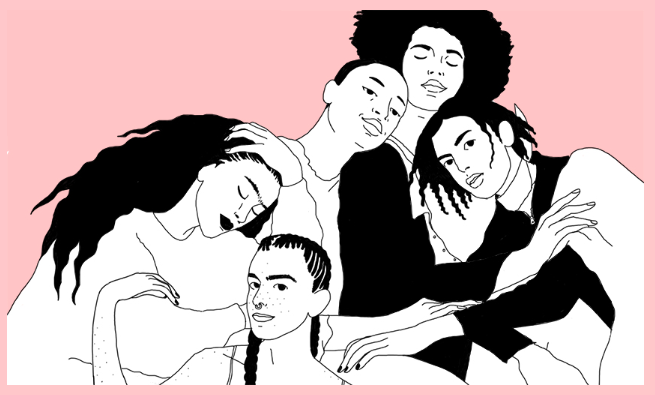
Artwork by Elise Chastel.

Artwork by Elise Chastel.

In recent years, Black women have been dominating the covers of fashion magazines such as Elle, Vogue, Marie Claire, celebrating the melanin richness and creative coiffures of writers, fashion designers, and more. These Black women are featured because they have excelled as cultural producers and many of them have become iconic household names—Beyoncé, Issa Rae, Lupita Nyong'o. Their image and success have conjured up such phrases as “melanin poppin” with a new revival of the 1960’s mantra “Black is Beautiful.” While Black women have been rejoiced on these platforms, this has not always been the case.

Many Black women that I grew up with had kinky curly hair and articulated their complicated and layered hair stories. Some harped over the labor it took to straighten their hair with a hot iron and others would straighten their hair with a sulfur-based chemical relaxer wanting to replicate a Jane Fonda look. These ritualistic acts were concerned with one thing—disentangling the curl.

I have never loved my hair mostly because I was always told that there was something wrong with it and that it had to be manipulated. Having lived in three continents--Africa, Europe, and North America--my hair care journey has been an internal struggle clouded by external limits. From early on, my 4C hair has been disregarded as “bad hair,” leading my family members to chemically straighten my dark coils. At the age of 13, when I learned about the sulfur-based products in chemical relaxers, I decided to set myself on the path to natural hair. With very little guidance and encouragement from my family, I did what I could best, I either kept my hair short, wore locks, or had my hair braided. One of the many things that are difficult about living in Germany is that so many of the hair care products do not work for my 4C hair. Beyond that, the Black hair care industry often has items that are overpriced and unaffordable. The process of working with hair that is disregarded has been a lifelong journey.

What I perceived to be a personal struggle for managing my hair extended even to the demi-gods amongst us who also spoke about their hair woes. The Black American poet, Maya Angelou once remarked, "Whenever something went wrong when I was young - if I had a pimple or if my hair broke - my mom would say ”Sister mine, I'm going to make you some soup. And I really thought the soup would make my pimple go away or my hair stronger.” For Black women, including myself, the hair journey can be an arduous path entangled in moments of despair so it is no accident that a new generation of people are trying to challenge these falsehoods and create new spaces for Black beauty.

In North America and Europe, Black hair care has evolved to incorporate more expansive and healthier approaches to discussing and displaying curly hair. From New York City’s Curl Fest to the visual archives of Afropunk, the African diaspora have found various meeting points to document the diversity of hairstyles and expression. In Berlin, where I live, Afro-Germans hosted the first annual Curl Con, that featured workshops, Afro-centric hair & skin products, food, and more. While speaking with Sarah, aged 35, at the festival, she remarked, “I was born in Germany and I can relate to every story every hurdle. It is tough. We are so beautiful. Girls talking to girls. There are models we need each other.”

In an age where people are dispersed, finding products that make one beautiful can be costly when one is a minority. The beauty concerns of Germany’s 2 million Afro-German & other African descended inhabitants is not a small matter given that some African descended are not sufficiently served in the hair & beauty industry. At the same time, their concerns speak to a wider problem in the beauty industry in Europe and beyond. As Funmi Fetto has written in The Guardian, gatekeepers of the beauty industry fail Black women precisely because they do not attend to curly and kinky hair care and the range of skin tones. Moreover, there are often difficulties in transferring knowledge about hair care within the community when the African diaspora is so diverse.

Another fault line of the hair care industry is that African descended people can spend up to three times more on hair and body care. What this goes to show is that racism is costly. What this shows is that people with curly and kinky hair textures might will often spend more to attend to their beauty needs. Even more egregious, as Oluwaseun Matiluko wrote about in Gal-dem, is that the beauty industry does not always pay attention to the concerns of Black women and other women of color.

Black Hair is political not because we want it to be but because these industries were not designed by us and made for us. For many African descended people who are far away from home, developing a community with other Black people can provide the opportunity to rant, share stories, and cope with hair woes. That is why it is important to have forums, spaces, and gatherings that center curly hair specialists who can provide advice, without judgment. My hair journey is currently being realized in Germany, where the African diaspora is allowing some people to celebrate their curls rather than simply suppress it. Nevertheless, more can be done to make Black hair and skin less taboo and more inclusive—one that fosters healthy relationships with Black curls.

Episode 6: Towards an African Technological & Scientific Imaginary

Towards an African Technological & Scientific Imaginary

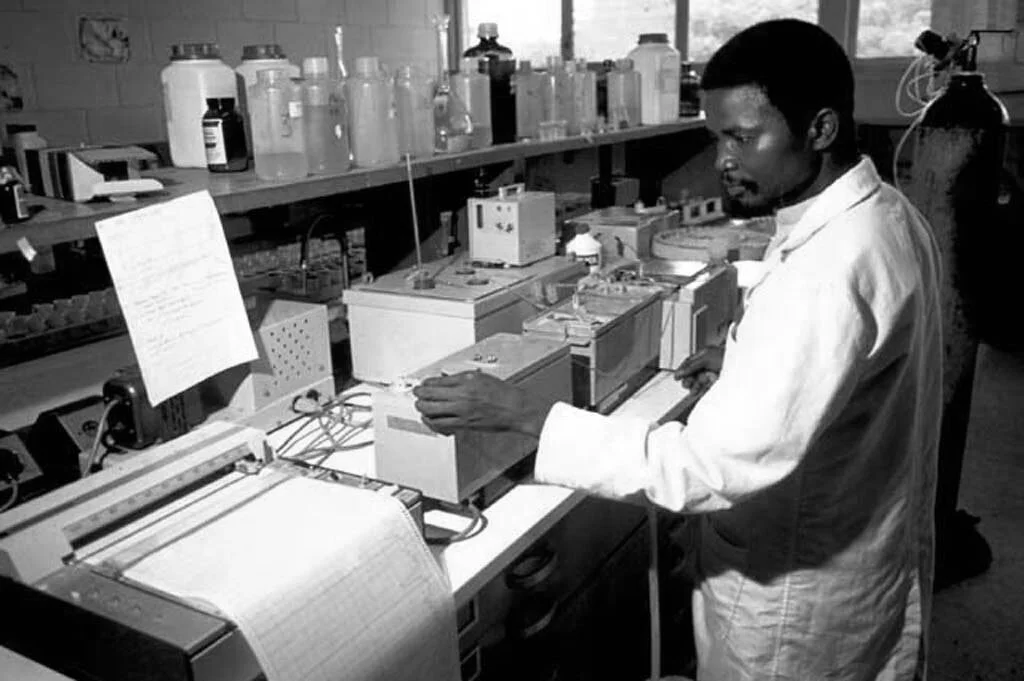
Image: “Technician in biotech laboratory” by IITA Image Library is licensed under CC BY-NC-SA 2.0

Image: “Technician in biotech laboratory” by IITA Image Library is licensed under CC BY-NC-SA 2.0

In this episode of Decolonization in Action, I speak with Professor Chakanetsa Mavhunga discuss the history of the African continent with relation to scientific, technological, and medical innovations. A center element of this conversation is the role that philosophical traditions and space have in shaping the epistemology of knowledge. They also examine Africa’s colonial history, the power of historical narrative, African women scientists, and the future of innovation on the African continent.

Chakanetsa self-identifies as a critical thinker-doer, who deploys historical research in service of problem-solving. Chakanetsa is a tenured associate professor of science, technology, and society (STS) at MIT and the founder of Research || Design || Build, a village-based institute in rural Zimbabwe dedicated to promoting interdisciplinary problem-solving, innovation, and entrepreneurship among Africa’s rural poor. He is the author of three books on science, technology and innovation in Africa, viz.: Transient Workspaces: Technologies of Everyday Innovation in Zimbabwe (2014); What Do Science, Technology, and Innovation Mean from Africa? (2017, editor); and The Mobile Workshop: The Tsetse Fly and African Knowledge Production (2018), and is working on the fourth, titled African Chemistry: Science with an African Totem.

Decolonization in Action Podcast Episode 4: Colonial Medicalization

Check out the latest episode for Decolonization in Action, a podcast series that I co-host. In Episode 4: Colonial Medicalization and Homosexuality in the Philippines, Kristyna Comer was in conversation with Kiel Ramos Suarez, a PhD candidate in history at Linnaeus University. Kiel discusses her current research on the medicalization of homosexuality and the ongoing impact of Spanish and US colonial rule. 


This podcast focuses on how decolonization is being put into action today. In conversation with historians, activists, artists, and curators, we unravel how decolonization is understood, and to give attention to how decolonization is being practiced today. 

Image by Nina Prader

Image by Nina Prader


You can listen to Decolonization in Action on iTunes, Spotify, and SoundCloud. Please subscribe and rate the podcast if you like what you hear. Also, you can also follow us on Twitter at: @decinaction If you would like to stay informed about future episodes and to receive updates, please subscribe on our website: https://decolonizationinaction.com


COLLECTIVE HERBAL HEALING: A COUNTER-ARCHIVE IN THE MAKING

I recently published an article for Coven Collective (Berlin), a sex-positive transdisciplinary genderbender collective focused on feminism, love, gender, sexuality and art. Founded in 2013 in Berlin by Lo Pecado and Judy Mièl, it is on its way to conqueer the universe with a feminist conflation of provocative fine-lined aesthetics and critical brainwaves in form of art, essays and events, always using a breath of irony. My article can be found here and it goes as follows…

————

COLLECTIVE HERBAL HEALING: A COUNTER-ARCHIVE IN THE MAKING

Photo by Nine Yamamoto

Photo by Nine Yamamoto

by edna bonhomme

Research is a dirty word—not because it has to be but because those who often wield the levers of power make it that way. As a historian, I often struggle with narrating the stories for those who passed away – especially those who left little written trace. Archives and oral histories are often central to the historian’s research practice; scholars can spend years of their lives convening with ancient texts. For example, diplomatic records can be a gold mine for uncovering espionage disguised as cordial politics. But what does one do when nothing is written? One struggle endemic to my historical work has been finding the voice of the enslaved, the desires of the queer, and the sentiments of the illiterate. In some ways, this is grounded in finding a home in my practice, a way to uncover the many domiciles  that my ancestors made and remade. The near erasure of these people is not an accident. It is by design.

While I recognize that no archive is innocent, my family history is grounded on non-textual sources. We are people who travel. And what I find is that Haitian diasporic women serve as healers, historians, and more. Starting from the continent of Africa, to the slave ships that brought them to Saint-Domingue during European colonialism in the Caribbean, up to present day Haiti, Haitians have continued to redefine the ways in which they seek and use healing. Mapping enslaved narratives is not just an act of narration, but it is an embodied experience that can incorporate the joy of Haitian processional music, like that of mizik rasin band such as Boukman Eskeryans. 

 In recent years, the story that I was unable to tell was the story about myself—the story of my Haitian ancestors, their inner struggles and moments of jubilation. The historical absence of my lineage in the archive who were stolen from Africa is not unique to me. It stands true for many African descended people whose families still live in the settler colonial countries of the New World from Brazil to Canada. Part of the trouble of reckoning with this past is engaging with the archives that bear the strange fruit in the shape of, for example, captain logs and inventory lists from the trans-Atlantic slave trade until the last Haitian dictatorship: Archives nationales de FranceLes Archives Nationales d’Haiti, the British National Archives, the Schomburg Center for Research on Black Culture and more. In Silencing the Past, the late Haitian anthropologist,  Michel Rolph-Troillot juxtaposed the West’s erasure of Haitian history in light of the West’s present anxieties about Black liberation. He wrote, “History is the fruit of power, but power itself is never so transparent that its analysis becomes superfluous. The ultimate mark of power may be its invisibility; the ultimate challenge, the exposition of its roots.” Recently, Dr. Nicole Willson discovered the will of Marie-Louise Christophe, the queen of Haiti. She died in Pisa in 1851. In 2009, I saw her statue at the remains of Sans Souci, the palace that had been built in northern Haiti by her husband, Henri Christope, the emperor of northern Haiti. This tension between those who are documented and those who are left out is precisely what I want to blur.

The evidence for non-elite black history is far-reaching, from slave testimonies such as The History of Mary Prince, the first written narrative of a formerly enslaved woman from the Americas, to ethnographic accounts by Black American writer Zora Neale’s Tell My Horse, an early twentieth century text that documents voodoo rituals in Haiti and Jamaica. How do we use more sources developed by Black women to mark the obstinate and non-elite stories of the past? In her recent book, Wayward Lives, Beautiful Experiments, the African American scholar Sadiyya Hartman suggest that one can “employ a mode of close narration” to capture these untold stories. This act of close reading for invisible subjects requires a bit of learning and unlearning, yet hidden beyond that is a process of excavation and repair. That is to say, learning to capture the disorder of the world that produced these inequalities and to hone in on the narratives that are already living amongst us, in other words, through oral histories, food, music, and more. 


edna bonhomme, self-created family archive, installed as part of Scan the Difference, VBKÖ, Vienna, Austria, 15-21 May 2019. Photograph by edna bonhomme.


In an attempt to honor the past through an act of repair, I bypassed the traditional archives, their hierarchies of power, and the act of (re)imagination through personal narration, mapping slavery, collective cooking with members of the collective COVEN BERLIN, and an assemblage of people who trusted our journey enough to engage in history through action.  

In order to do that I faced the history that I knew. I was born and raised in apartheid America, on the land of the Seminole people. The land was first colonized by the Spanish and then the British and now it is called Florida. My family’s trans-Atlantic history is an indication of our proximity to freedom and notions of “human.” Our precarity is, as Sylvia Wynter remarks, “unsettling the coloniality.” When my ancestors survived the Middle Passage and were forced to work the plantations on Arawak land in the Caribbean Sea, they soon found out that “our bodies are not our own.”* Instead, they were commodities.

As the recent New York Times 1619 Project has documented, the Transatlantic slave trade was not a linear phenomenon. It was comprised of an intricate relationship between Western Europe, Africa, and the New World. Slaves who arrived on the shores of Saint-Domingue, beginning in the sixteenth century, were taken from various parts of West and Central Africa. Upon arrival to the New World, they bore the enormous burden of being viewed as laboring property, or “enslaved workers.” As such, they suffered the  indelicate balance of needing to be healthy enough to increase their productivity, while being perceived as unworthy of medical care. On the plantations of Saint-Domingue, slaves had harsh exposure to the elements, imaginably poor living conditions, and long, miserable, back-breaking work days. They also suffered from malnutrition and protein, iron, and Vitamin B deficiencies, among others.

My family members were dissidents under the dictatorships, people who took a boat from Haiti to Miami, aware of their radical past, and proud. As a child, I was presented with bits of our history, not through books but through folklore, through music videos, through Rara. Boukman Eksperyans’ song Ke m Pa Sote, produced in 1990 after the dictatorship and during a military coup, along with other celebratory music, inspired working class Haitians to revive the rara tradition. Beyond that, the celebration by Rara groups such as Boukman Eksperyans gestures towards Voodoo, which has served as a spiritual rock for the African diaspora during and post slave-trade.


How do we find the working poor, the displaced, dispossessed, and disenchanted in the archives?

Sometimes you cannot.


With limited access to proper care, slaves had to navigate a new territory and a new identity in order to form a system to help them survive daily life. Through their tactics of survival and their politics of care, slaves were able to familiarize themselves with local herbal resources in Haiti. Many of the holistic healing practices used during colonial Haiti are still used today. Enslaved people used these materials for healing and spiritual repair and they reflected the resistance and resilience of the slaves in the face of one of the most inhumane periods in history. What I came to know is that although their names and their contributions would not be found at the Archives Nationales d’Haiti, their capacity to pass on knowledge about the Haitian revolution through stories and healing practices was, in some sense, an alternative archive.

Because I am the descendant of Black farmers and fisher people, we have no records, no objects, no birth certificates, just inherited debt from an uneven system built to relegate us to the non-human. But that narrative is not complete. Black women such as Cécile Fatiman were central to my liberation because they were the narrators and archivists for the sources that never existed.


Still, edna bonhomme, Herbal Archives (film), 2019.


How do we care for each other in the face of trauma? We repair ourselves with the flora that can protect us. Scientists have found that Haiti is saturated with medicinal plants, leaving people to use fresh ginger to improve the immune system, and in some cases, using castor oil to heal sore muscles. Repair can also mean learning the herbal practices that  simultaneously operated as part of somatic healing and as an act of resistance in the face of oppression. I am not a master herbalist and I am not a member of the voodoo religion, but the process of inquiring and excavating the historical trauma provides some entry point to repair.

In this way, re-narrating the archives through plants re-orients what home can be. The late and great writer Toni Morrison remarked, “Home is something very peculiar. Something special, mystical, hopeful, restful.” I do not have a home, but I have been housed in many places that are deeply entrenched in the genocide of indigenous subjects and the free labor of enslaved subjects. Home is not solely about the trauma. It can be a place of reckoning, a place of healing, a place that one can claim.


*This is referencing my poem, “Our bodies were never our own”

by e. bonhomme


Our bodies are not our own

Whether we picked tobacco on the rolling hills of Saint Domingue

Or we stood on the front porch of a West Virginia estate


Whether we rose at daybreak

On a sweltering summer day

Right before the dew

Evaporated from the orchids


When we laid next to our kin

On the dewy ebony floor

While we shivered ourselves to sleep


When all we wanted to do was kiss

Our first love but the slave master kept us at bay


Our bodies are not our own

During the inferno in the South Bronx

When derelict brownstones are set ablaze


When we stand at border control

With unfit passports and melanin rich skin

And we are told that we can’t get in


When we walk into a hospital for treatment

and told our pain is in our is in our head


When the bus depot pollutes the air in Harlem

When the auto factories poison our water in Flint, Michigan

When the petrol company destroys our ancestral land

THIS IS MEDICAL APARTHEID


We know that our flesh is full

And our smiles are wide

When it glistens in the afternoon Sun

Our bodies in their capacity to endure are beautiful

The Color of Health and The Color of Debt

I recently published two articles that explore the intersections of racism and health as well as racism and debt. The first article is about the British NHS and it was published in The Baffler, a left-wing journal. In one section of the article I indicate:

"truly universal health care requires comprehensive reform that looks into the lives of marginalized people—patients, migrants, and workers who find themselves unable to heal or work in the medical field."

Screenshot 2019-11-11 09.24.29.png

The second article is on debt and it was published in The Nation Magazine, a progressive magazine highlighting social movements and more. The article explicates the color of debt and how Black Americans are disproportionately impacted by this economic bondage. From one section of my article, I write:

A decade later, my signature on that dotted line still plagues me. The student loan debt of black Americans is $7,400 more than that of our white peers, and that amount can triple years after graduation—mostly because of accrued interest, but also the result of the pervasive inequalities that increase throughout one’s life.

I believe that we need to adopt anti-racist universal programs that acknowledge how the legacies of intergenerational and current inequalities continue to plague us with perennial debt. We needed reparations yesterday and I hope that it becomes part of a serious, international struggle against austerity.

Finally, I am really grateful for the editors and the fact checkers at The Baffler and The Nation Magazine for helping me through the editorial process. I highly recommend supporting progressive media such as these through subscriptions, donations, or by simply sharing the materials that they produce.

Collectivity Deconstructed

“We are a collective of Black feminists who have been meeting together since 1974. [1] During that time we have been involved in the process of defining and clarifying our politics, while at the same time doing political work within our own group and in coalition with other progressive organizations and movements. The most general statement of our politics at the present time would be that we are actively committed to struggling against racial, sexual, heterosexual, and class oppression, and see as our particular task the development of integrated analysis and practice based upon the fact that the major systems of oppression are interlocking. The synthesis of these oppressions creates the conditions of our lives. As Black women we see Black feminism as the logical political movement to combat the manifold and simultaneous oppressions that all women of color face.”

-Combahee River Collective

Dice Conference Room, November 2019

Dice Conference Room, November 2019

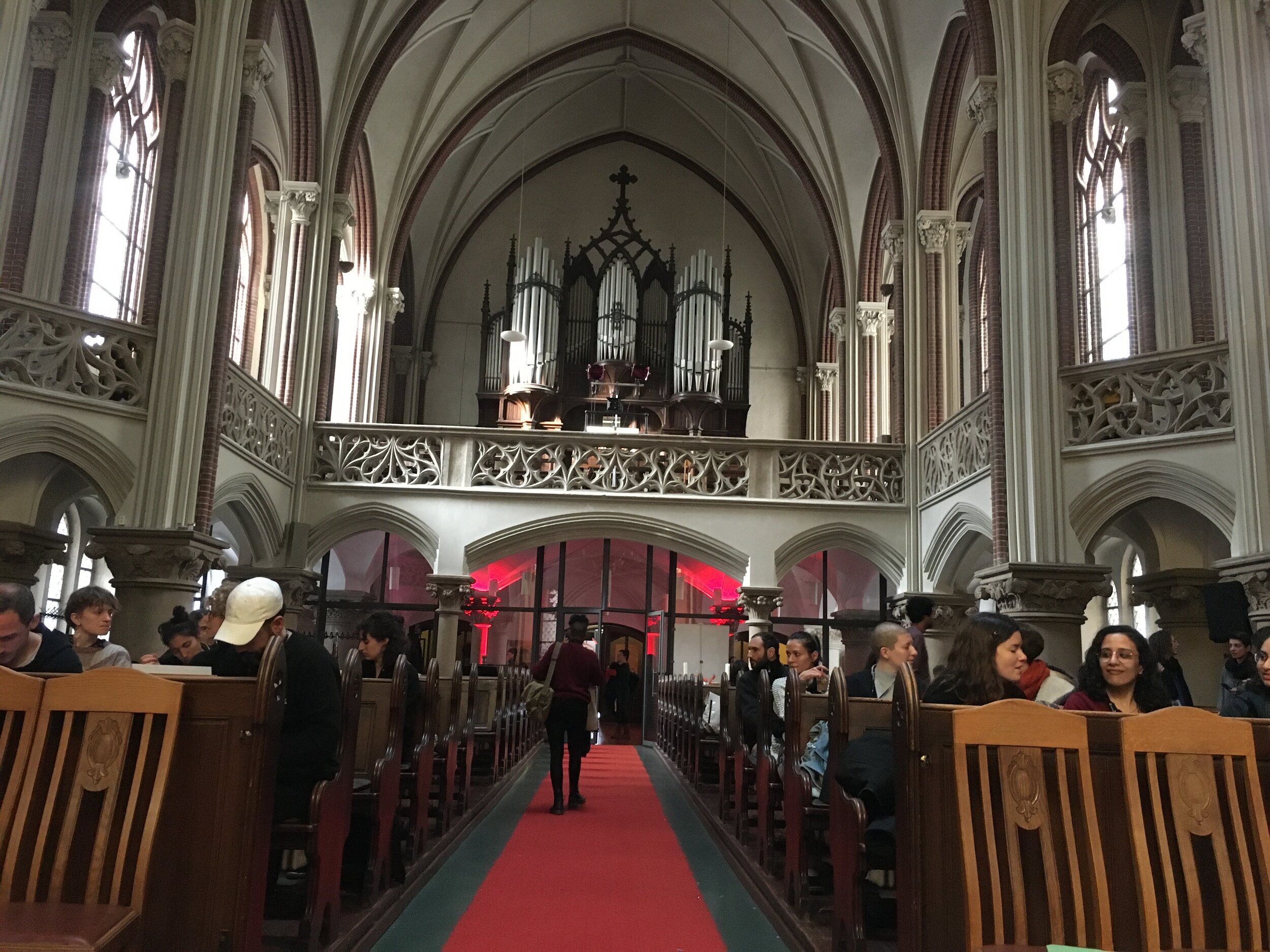
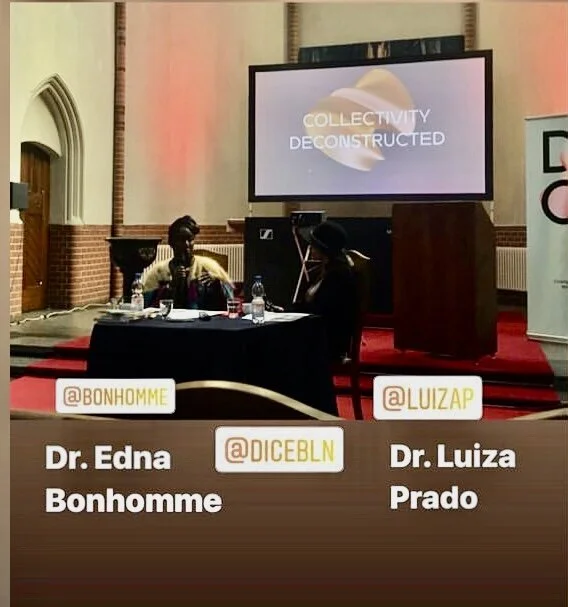
On 1 November 2019 lecture for the DICE Festival Berlin, Dr. Luiza Prado and I spoke about collectivity, our journey, and our quest to community. We convened in Kreuzberg and converted a church into a feminist space where we centered marginalized voices. We prepared the room by burning sage, brewing tea, and arranging food. We asked the audience to write about what collective meant in their native language. For ten minutes or so, we discussed these various definitions with the participants in the room.

Edna Bonhomme and Luiza Prado.

Edna Bonhomme and Luiza Prado.

What we found is that although identity can be an entry point to forming a collective spirit, it is not the only pathway. What we concluded was that care is a Central part of Collective Work, not only because it provides us nourishment, but because it gives us an entry point to radicalize our social relations. Under capitalism, our labor (both reproductive and productive), can be undervalued, but that odes not mean that we cannot undo the damage. As such, we concluded that it is imperative to make time to rest. Naps are okay. Tension is as well. However, the key for our collective work is to take an intersectional approach, not on a superficial level but one that challenges systems of oppression, one that centers the most marginalized voices, and one that disrupts the master’s tools.

Fighting To Survive: A Panel on Black and Indigenous Liberation

"The place in which I’ll fit will not exist until I make it”.

-James Baldwin

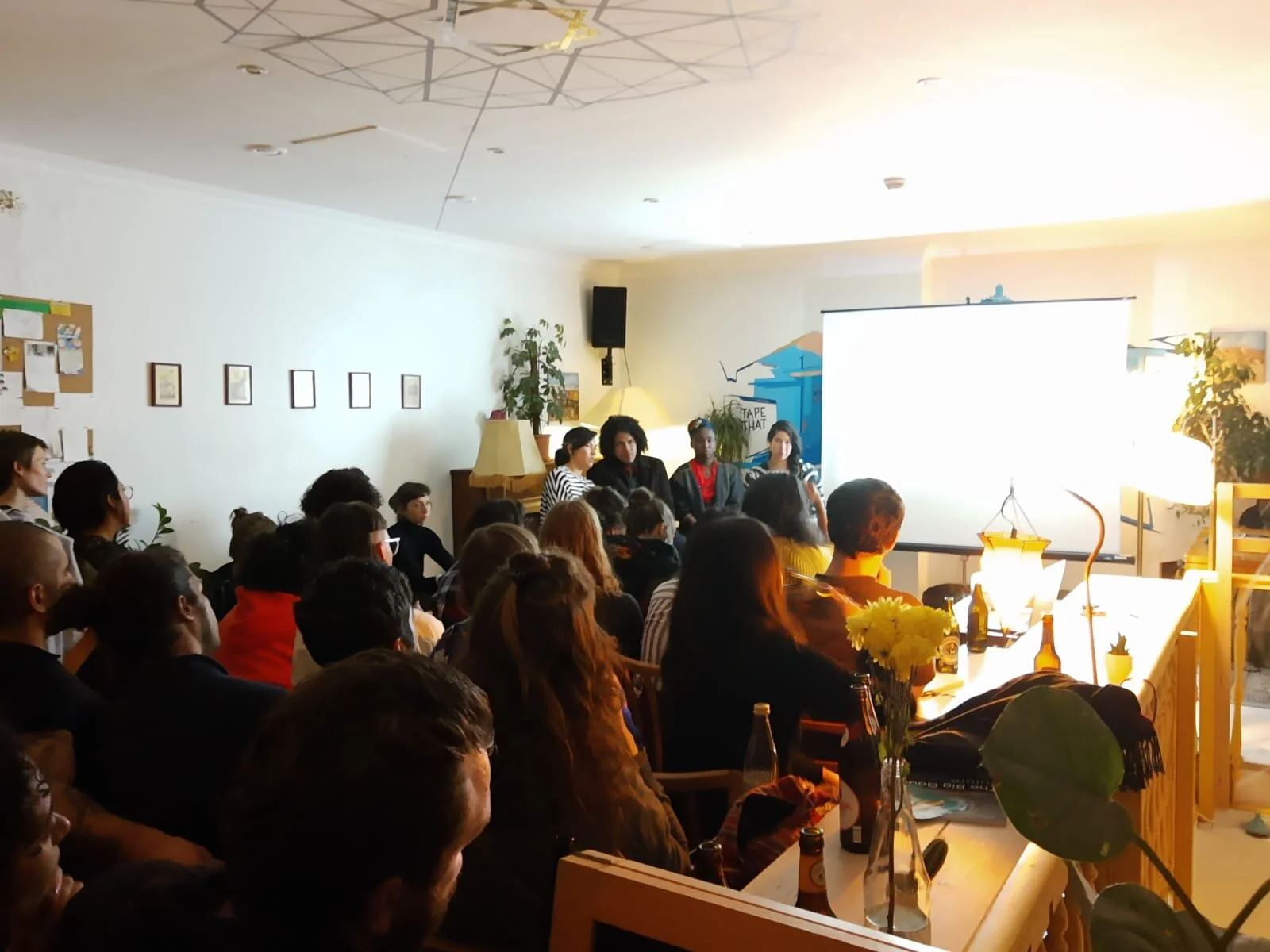
On 8 October 2019, I co-organized an event for Berlin’s first Anti-colonial Month at be’kech anti-cafe in Wedding, a working class neighborhood in Berlin. This is part of growing concerns about the ways that the legacy of colonialism live on today and the extent that we can foster conversations with people from the Global South. One thing that I learned from curating this event is that the borders that separate do not need to be so fixed or permanent and that there are other ways for us to connect our struggles to survive and thrive. At the same time, we have the power to learn from each other, to grow together, and to win together.

Panelists for “Fighting to Survive”: Helo, Gabiel, Edna, and Melody.

Panelists for “Fighting to Survive”: Helo, Gabiel, Edna, and Melody.


The event featured filmmaker/lecturer/Black Lives Matter activist Melody Howse, Black Brazilian leftist/poet Gabriel Silva, with Portuguese-English translations by Brazilian anti-colonial month organizer Helo Yoshioka. These were activists and scholars who unpacked the ways that various nation-states monitor, regulate, and criminalize people of colour and how these modes of surveillance are tied to legacies of colonialism and slavery in Brazil and Europe. As fascist movements undergo a surge in North America, South America and Europe, Black and indigenous people have been subjected to various forms of state violence, whilst developing new political languages to survive.

While there is no single definition of freedom, the Black American activist Fannie Lou Hamer said:


“If I fall, I'll fall five feet four inches forward in the fight for freedom. I'm not backing off.”