• Home
  • About
  • Books
    • After Sex
    • A History of the World in Six Plagues
  • Writing
    • Essays & Features
    • Book Reviews
    • Interviews & Profiles
    • Academic Writing
  • Awards & Fellowships
  • Events
  • Podcasts & Radio
  • Research
  • Exhibitions
  • Teaching
  • Contact
  • News
  • Menu

EDNA BONHOMME

Historian | Critic | Journalist
  • Home
  • About
  • Books
    • After Sex
    • A History of the World in Six Plagues
  • Writing
    • Essays & Features
    • Book Reviews
    • Interviews & Profiles
    • Academic Writing
  • Awards & Fellowships
  • Events
  • Podcasts & Radio
  • Research
  • Exhibitions
  • Teaching
  • Contact
  • News
64E09942-7753-4490-9A91-4AB41F37ED5D.JPG

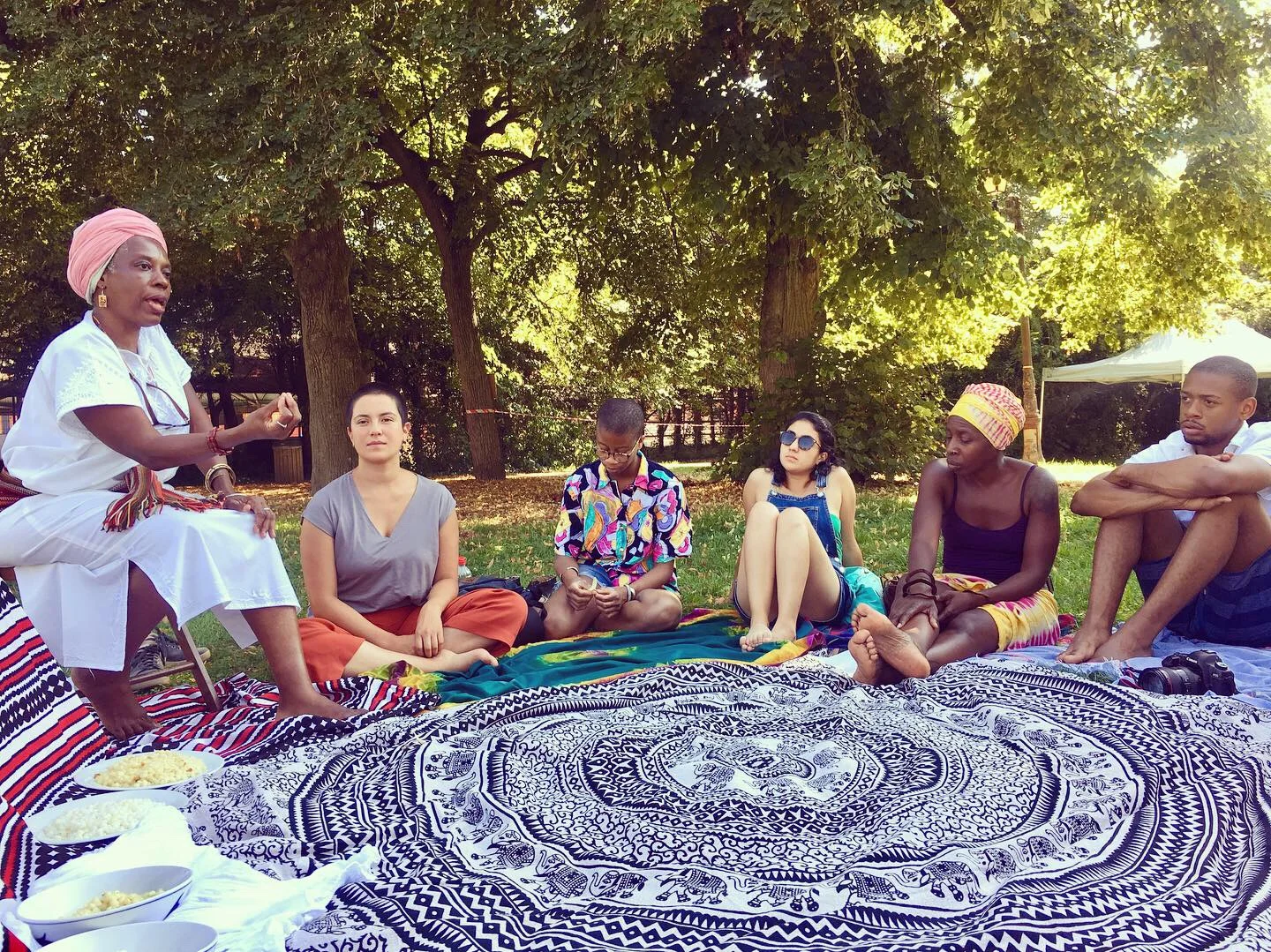
Learning about Candomblé

August 25, 2019

The African diaspora is so saturated with beauty, knowledge and strength and we have so many stories to tell. While in Paris, I learned about Candomblé an Afro-Brazilian religious tradition that was developed by enslaved Africans who originated from West African and were forced to migrate to settler colonial South America. The slaves and their descendants carry the traditions of Yoruba, Fon and other beliefs to honor Oludumaré and the many Orishas among us. She taught us that the practice is abot love, negotiation, collective power, and acceptance. I learned so much but was also struck by the positivity and love that was received by this practice which can be contrasted with the massive stigmatization of Voodoo in Haiti and by non-Haitians.

When a Gabonese friend and I discussed we could not help to think that it boiled down to one thing—Haiti has and will continue to be punished for what they do. As a Haitian person, I find that our African derived practices are not generally celebrated nor are they understood by outsiders. People rarely bother to learn Kreyol and often see Haiti (in the contemporary context) as a site of disease and poverty. But that is plain old wrong. I have been digging deep in my family’s history to challenge the lies I have been told and to unravel them so that I can see the beauty of my African descended cousins who speak Portuguese, Spanish, French, Dutch, etc, as well. Our traditions can be celebrated and taken up as an act of resistance not a subject of shame.

Prev / Next

News and Updates

Featured
Jun 29, 2025
European Book Tour | First Stop: Marseille
Jun 29, 2025
Jun 29, 2025
Feb 6, 2025
Pub Date Approaching
Feb 6, 2025
Feb 6, 2025
Apr 25, 2024
Teaching at the Universität der Kunste Berlin
Apr 25, 2024
Apr 25, 2024
Mar 29, 2024
Road Trip
Mar 29, 2024
Mar 29, 2024
Feb 13, 2024
Contributing Writer for Frieze Magazine
Feb 13, 2024
Feb 13, 2024
Dec 7, 2023
The Andy Warhol Foundation Arts Writers Grant for 2023
Dec 7, 2023
Dec 7, 2023
Nov 3, 2023
After Sex Book Launch
Nov 3, 2023
Nov 3, 2023
Oct 27, 2023
Some of my book reviews
Oct 27, 2023
Oct 27, 2023
Aug 8, 2023
Recipient of the Robert B. Silvers Foundation Grant
Aug 8, 2023
Aug 8, 2023
Jul 16, 2023
A Word about Haiti, Abortion, and Art
Jul 16, 2023
Jul 16, 2023